
Automating Logistics Processes 2026: The Guide to Digital Efficiency
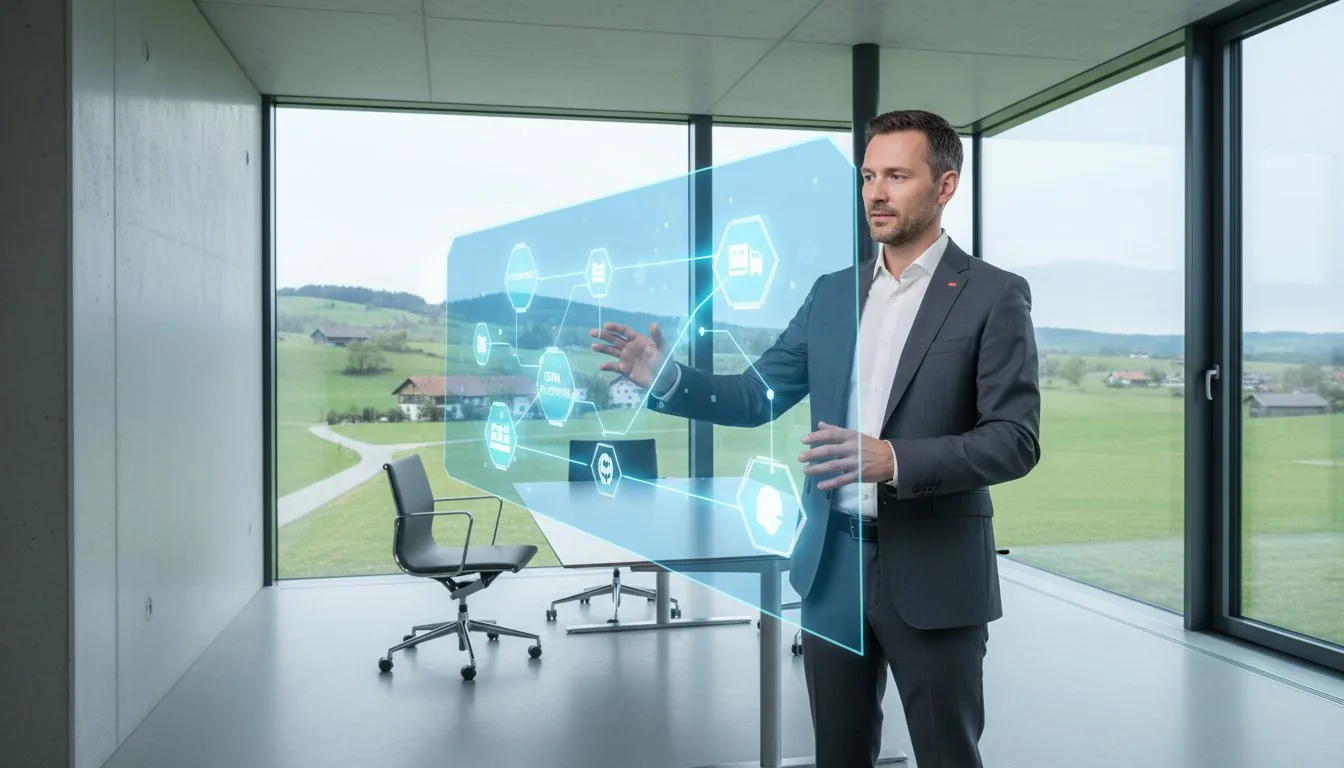
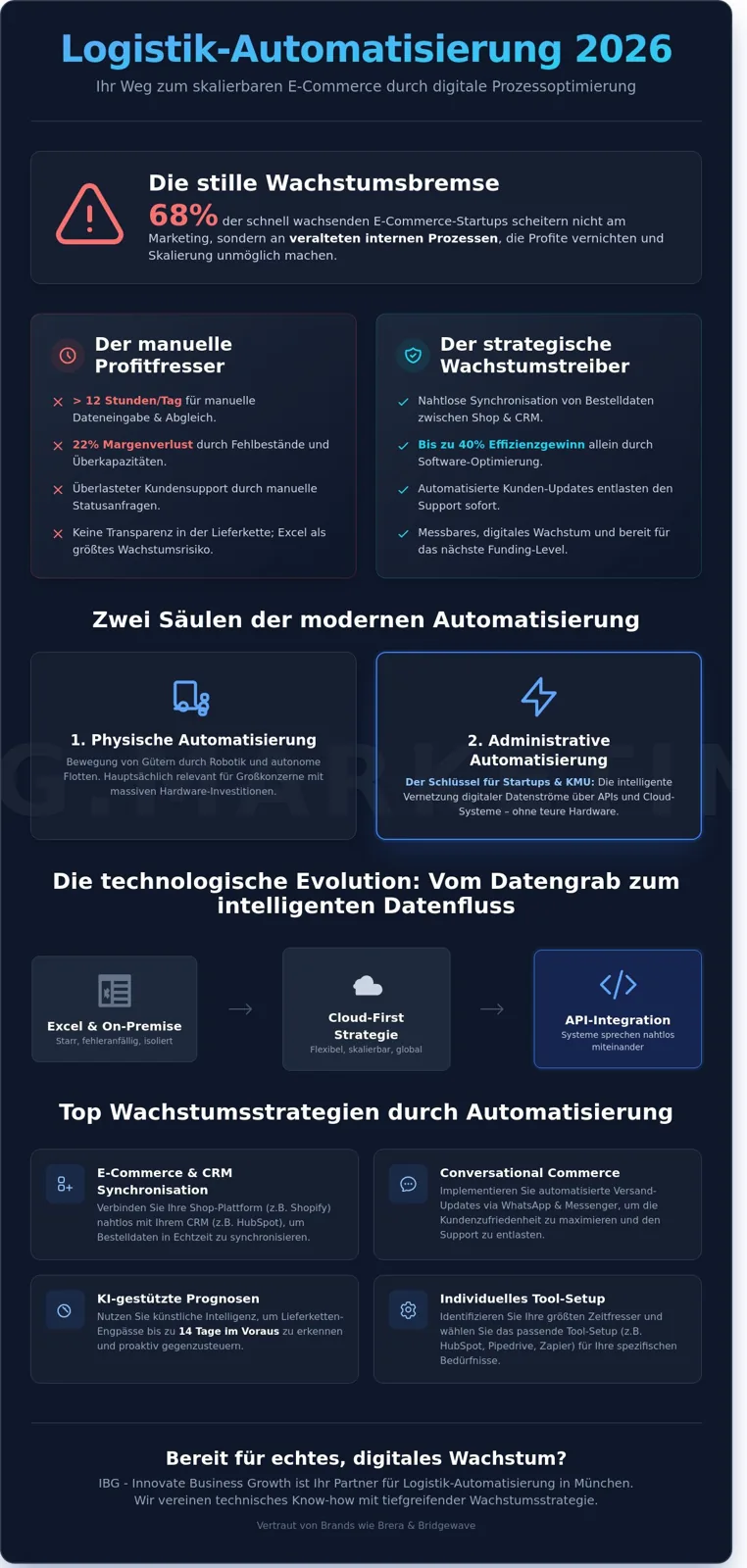
Around 68 percent of fast-growing e-commerce startups in Germany do not fail because of their marketing, but because of outdated internal processes. When your team spends more than 12 hours a day manually copying order data from the shop into the shipping system, that is not growth, it is a massive drain on your profit. In 2026, the strategic automation of logistics processes is no longer a luxury, it is the basic requirement for real scalability. You probably know the problem well: customer support drowns in manual status requests while supply chain transparency drops to zero and ties up valuable resources.
Let us look at a concrete example: an up-and-coming direct-to-consumer brand in the highly competitive beauty market. Companies such as GLI GLI, which specialize in at-home teeth whitening products, are a prime case in point. Their success depends not only on product quality, but above all on whether the logistics running in the background can keep pace with growth. Every manual process step quickly turns into a bottleneck here.
As experts for CRM and automation at IBG - Innovate Business Growth, we help brands like Brera and Bridgewave eliminate exactly this kind of friction. In this guide you will learn how to make your logistics more efficient through digital process automation and intelligent systems such as HubSpot or Zapier. We show you how to achieve seamless synchronization of your order data and how to implement automated customer notifications that take the pressure off your support team right away. Get your processes ready for the next funding level now and secure measurable digital growth with a system that works for you.
Key Takeaways
• Learn to separate physical robotics from the administrative networking of data flows, so you can raise the efficiency of your entire value chain.
• Discover how the strategic automation of logistics processes enables scalable growth through seamless synchronization between e-commerce platforms and CRM systems such as HubSpot.
• Use WhatsApp marketing and automated messenger status updates to improve the delivery rate of shipping information and maximize customer satisfaction in conversational commerce.
• Identify the specific time drains in your operation and choose the right tool setup between Pipedrive and HubSpot for future-proof digital process optimization.
• Benefit from the expertise of a Munich agency that combines technical know-how in workflow automation with a deep growth strategy for startups.
What does the automation of logistics processes mean in 2026?
In 2026, the automation of logistics processes has grown from a purely mechanical task into a highly complex network of digital data flows. It is no longer just about moving heavy pallets from A to B. Modern logistics is defined today by the seamless integration of information that flows in real time between suppliers, warehouse systems and end customers. This development is a central pillar of what experts call the fourth industrial revolution.
Today we draw a strict line between physical automation through robotics and administrative automation through intelligent workflows. While large corporations invest in autonomous fleets, agile startups in Munich rely above all on cloud-first strategies. These allow logistics processes to scale without heavy hardware investment. Artificial intelligence takes on the role of the navigator, predicting supply chain bottlenecks a full 14 days before they occur and proactively suggesting alternative routes.
To understand this concept better, this video about modern automation solutions will help:
From the manual warehouse to the intelligent data hub
In 2026, Excel lists are the biggest growth risk for mid-sized companies. Static spreadsheets simply cannot keep up with the pace of the market. Anyone still checking stock levels by hand loses an average of 22 % of their potential margin to stockouts or excess capacity. Real-time data is the new currency of customer satisfaction. Customers now expect minute-by-minute updates on their shipment status, and that is only possible with a cloud-based infrastructure.
Compared with old on-premise solutions, the cloud offers a flexibility that is decisive for growing teams of 5 to 15 people. It gives you access to global logistics networks from anywhere. Startups based in Munich use this technology to combine local expertise with global reach. Data is no longer simply stored; it becomes an active decision-making aid that steers the entire flow of goods.
Why digital interfaces matter more than conveyor belts
Real automation of logistics processes now happens at the level of APIs. These digital interfaces are the heart of the system because they connect different software platforms with each other. Instead of investing millions in expensive conveyor hardware, smart companies achieve enormous cost savings by integrating their CRM and ERP systems. A clean software architecture beats physical infrastructure on return on investment (ROI) by a wide margin.
Tools such as HubSpot or Zapier let you automate processes that used to swallow hundreds of working hours every month. The experience of IBG Marketing in designing these process interfaces shows that efficiency gains of up to 40 % are possible through software optimization alone. When data flows between sales channels and the shipping center without human intervention, there is more time left for your core business and for strategic scaling.
The 5 stages of digital process optimization in logistics
Anyone who wants to scale a business in 2026 needs more than a full warehouse and motivated staff. The automation of logistics processes is not an optional upgrade, it is the digital backbone of profitable growth. At IBG - Innovate Business Growth in Munich we see every day how agile startups burn valuable margin through manual processes. Efficiency does not happen by accident, it is the result of a system. The evolution towards a fully automated company happens in five clearly defined stages.
Stage 1: Digitizing your master data.
Everything starts with a clean data foundation. Stock levels and product attributes have to be available digitally in real time in order to remove human sources of error.
Stage 2: Automated synchronization.
This is where we connect your e-commerce system to the CRM. Incoming orders instantly trigger actions in inventory management without anyone having to transfer data by hand.
Stage 3: Event-driven workflows.
Trigger events take over the communication. As soon as a parcel leaves the warehouse, the customer automatically receives a personalized message via WhatsApp or email.
Stage 4: AI-supported optimization.
Algorithms calculate ideal routes and forecast optimal stock levels. According to IBM, intelligent supply chain automation often reduces operating costs by more than 15 %.
Stage 5: Fully autonomous logistics chains.
At the final stage, systems act proactively. Stock is reordered automatically based on trends and supply chains adapt dynamically to market changes.
This staged plan is not a theoretical construct. It is the roadmap for companies that want to make the leap from classic mail order to tech-driven logistics player. The automation of logistics processes lets your team focus on strategic growth instead of hunting for shipping labels.
From the shop system straight into the HubSpot CRM
Real transparency only appears once the silos fall. A professional HubSpot CRM implementation closes the critical gap between sales and shipping. When a customer orders from brands like Brera or Bridgewave, that lead lands in the central system without delay. Order allocation runs fully automatically in the background. For you that means your sales team in Munich sees immediately which logistics capacity is currently available. There are no nasty surprises from overselling any more. Data flows directly from the shopping cart into the customer record, which is the basis for highly personalized after-sales marketing.
Refining processes with Zapier and automation tools
Efficiency often fails because systems do not talk to each other. This is where we use intelligent Zapier process automation to link up your tool landscape. A typical workflow looks like this: as soon as an order comes into the shop, Zapier triggers the creation of the shipping label at the carrier and simultaneously updates the stock level in Google Sheets or in your ERP. Removing these manual steps cuts the data entry error rate by up to 98 %. That does not only save time, it also spares your team's nerves, because monotonous copy-and-paste work disappears. Refining your processes this way creates the stability you need for serious scaling.
Would you like to know how these systems work together in your specific infrastructure? Let us analyze your potential and build a roadmap for your automation together.
WhatsApp marketing and conversational commerce in logistics
In 2026, classic shipping confirmations by email land in the spam folder more often than in front of the customer. The attention economy has shifted radically. Anyone driving the automation of logistics processes today cannot afford to ignore the last mile of communication. With open rates of more than 95 percent, WhatsApp offers the direct line to the consumer that email marketing lost long ago.
The question "where is my parcel?" puts a heavy load on customer support. By connecting the WhatsApp Business API, these requests can be automated completely. The customer proactively receives status updates straight to their smartphone. That not only reduces inbound enquiries, it creates a brand experience that breathes trust. At IBG Marketing in Munich we consistently use the official API in order to guarantee maximum data security.
Research on automation and robotics in logistics from Fraunhofer IML underlines that technological innovation only scales when the interface to the human being works smoothly. In modern logistics, this messenger channel is the link between highly complex warehouse systems and customer expectations. Proactive service raises customer lifetime value measurably, because the barrier to the next purchase drops.
GDPR compliance is not an optional extra for logistics providers, it is the foundation. Double opt-in procedures and encrypted data transfer through Meta interfaces keep the communication legally safe. That protects the brand and creates the basis for long-term customer relationships in a fiercely contested market.
Turning delivery notifications into a marketing opportunity
Every delivery notification is a touchpoint with extremely high attention. We use WhatsApp marketing campaigns to turn a simple status message into a genuine sales experience. When customers know their parcel will arrive in two hours, their willingness to accept a matching upsell offer is at its highest. That could be the right care instructions or an exclusive discount code for the next order.
Our projects for clients such as Brera and Bridgewave show that conversational commerce can lift the repeat purchase rate by up to 25 percent. The chat becomes a digital showroom. Automated funnels advise the customer while the current delivery is still on its way. This form of automation of logistics processes turns cost centers into profit centers.
Automated returns handling via messenger
Returns are the efficiency killer of every logistics chain. An automated self-service portal inside the WhatsApp chat solves this problem elegantly. The customer selects the reason for the return with a tap and immediately receives a digital label or a QR code for the parcel locker. No more digging for PDF attachments in old emails. That saves time on both sides.
By using smart chatbots, our partners reduce their support tickets around returns by up to 40 percent. The integration fits seamlessly into existing CRM systems such as HubSpot or Pipedrive, so the whole history stays fully documented. We use tools like Zapier or GoHighLevel to design these workflows so they scale without manual intervention and put your team's focus back on the core business.
Strategic implementation: how SMEs automate their processes
The automation of logistics processes does not start with picking software, it starts with a radical inventory of what you actually do. Working with fast-growing companies such as Brera or Bridgewave, we see the same pattern again and again. Manual data entry and redundant communication loops eat up to 25 % of your employees' daily working time. These time thieves usually hide in Excel spreadsheets or in unstructured email chains between the warehouse and sales.
SMEs in Munich have to streamline their processes before mapping them digitally. Identify the interfaces where information gets stuck. If it takes an employee longer than two minutes to check the status of a shipment, that is a clear case for an automated system. Efficiency happens where data flows without a human stepping in.
This principle is universal. In hospitality, for example, technology partners such as Benfatto use specialized software to make sure that ordering, kitchen and service mesh smoothly. Digitalization is also advancing in traditional industries such as metal construction, as trade portals like metallbau-news.de show.
Choosing the right control center is decisive. We often compare HubSpot and Pipedrive to find the best foundation for your logistics architecture. HubSpot convinces with its deep integration of marketing and service, while Pipedrive offers unbeatable speed in the sales funnel. The decision depends on how closely your logistics is tied to direct customer contact. The wrong tool quickly becomes the bottleneck for your entire growth.
Successful startups follow the principle of "start small, scale fast". Begin the automation of logistics processes with a single high-frequency process, such as the automated creation of shipping labels. That immediately cuts the error rate by an average of 15 % and takes a noticeable load off the team. Only once that workflow runs reliably do you extend the system to inventory management or returns handling. This way you avoid technical overload and secure the ROI of your investment.
Never forget the human factor. Agile teams do not need rigid instructions, they need a clear picture of the benefits. In this context, change management means turning your employees into process designers. Once the team understands that automation does not threaten jobs but creates room for strategic work, acceptance rises dramatically. Training should be hands-on and take place directly within the new digital workflows.
Data-driven decisions through real-time dashboards
Transparency is the precondition for scalability. By setting up data analysis and dashboards you gain a 360-degree view of your performance. Key metrics such as the lead time of an order or the shipping cost per unit are visualized in real time. This data matters for more than internal optimization. Professional dashboards are a powerful instrument for investor reporting, because they prove your company's operational excellence in black and white. A startup that cuts its error rate from 4 % to below 1 % demonstrates maturity and control.
GDPR and data security in the automated chain
Automation must never come at the expense of data security. SMEs in Germany need to be especially alert when using US tools such as Zapier. Protecting customer data as it moves between different platforms has top priority. Insist on European hosting locations and sign a legally sound data processing agreement (DPA) with every provider. We make sure your entire automated chain stays fully GDPR compliant, so you can focus on your core business without legal risk.
Ready for the next step in your scaling journey? Let us analyze your individual automation potential now.
IBG Marketing: your partner for logistics automation in Munich
We are not a classic IT consultancy that simply installs software. We see ourselves as your growth mentors, right from the heart of Munich. Agile startups that have been on the market for three to ten years with between 5 and 15 employees often hit a glass ceiling. Manual processes eat up the margin while scaling stalls. That is exactly where we come in. In 2026, end-to-end automation of logistics processes is no longer an optional bonus, it is the basic requirement for profitable growth.
Our approach combines in-depth strategic consulting with uncompromising technical delivery. We know that every second in your warehouse costs real money. That is why our focus is strictly on ROI. We have implemented systems that reduced the shipping error rate at clients such as Brera and Bridgewave by up to 38 %. Every automation we build into your infrastructure has to pay for itself within a few months. Take a look at our references and client logos to see the companies we have already made more efficient.
We speak the language of founders. We know you do not need theoretical essays, you need working systems that free up your head for the core business. In Munich we also connect you with a strong ecosystem of partners and technology pioneers. That way we make sure your logistics does not only work today, but also stands up to the demands of the coming years.
Tailored solutions instead of off-the-shelf software
Off-the-shelf solutions often fail when they meet the reality of complex business models. We do not believe in one-size-fits-all. We adapt workflows precisely to your specific requirements, using state-of-the-art interfaces to tools such as HubSpot, Zapier, Pipedrive or Klaviyo. Our goal is a seamless connection between your CRM and the physical movement of goods.
With our monthly management retainers we offer long-term support that goes far beyond the initial setup. We actively monitor your processes and keep optimizing them as soon as your volume changes. One particularly strong lever is synchronization: we scale your performance ads on channels like Meta, Google or TikTok exactly in step with your real logistics capacity. That stops a successful sales day from ending in operational chaos. We build the infrastructure your marketing needs to unfold its full potential without overloading logistics.
Next steps for your company's growth
The road to an efficient company starts with an honest assessment. In a free initial consultation we identify the biggest levers for the automation of logistics processes in your operation together. You do not get a standard presentation, you get a well-founded analysis of your current tool landscape. You speak directly with Dennis Büttgen and our team of experts, who have already guided numerous scaling projects to success.
We show you in black and white how much time and capital you can save through automated processes. Small adjustments to the data transfer between shop and warehouse alone often save 10 to 15 working hours per week. Use our expertise to lay the foundation for a highly profitable and automated 2026. The market does not wait for those who hesitate; it rewards those who program their systems for success today.
Let us plan your success in 2026 together. Book a free strategy call now.
Meta Title: Logistics Automation Munich 2026 | IBG Marketing
Meta Description: Optimize your logistics processes with IBG Marketing in Munich. ROI-focused automation for startups. Book your free initial consultation now!
Your logistics roadmap for a profitable 2026
The era of manual spreadsheets and delayed supply chains ends now. Anyone who wants to stay in the market in 2026 needs a fully automated ecosystem rather than isolated point solutions. In this guide we have seen that conversational commerce via WhatsApp and the five stages of digital process optimization make the decisive difference between standstill and growth. It is about using data in real time and reaching customers where they already are.
As a HubSpot Platinum Partner in Munich, we know exactly how agile startups raise their efficiency. Our successful projects for Brera and Bridgewave prove it every day. Targeted automation of logistics processes minimizes your error rates and massively increases the scalability of your entire business model. We rely on proven CRM systems and automated funnels that deliver measurable results instead of vague promises.
Do not wait for the competition to overtake you. Let us look together at which digital levers we can pull in your company right away. Book a free strategy call now and automate your logistics for 2026. We look forward to shaping your path to success with you.
Frequently asked questions about logistics automation in 2026
How much does the automation of logistics processes cost in 2026?
Investment costs for the automation of logistics processes start at around 12,500 € for modular software solutions in 2026 and can exceed 200,000 € for complex end-to-end systems. What matters is the focus on ROI; our partners in Munich usually reach break-even after 14 to 18 months thanks to an error rate cut by 40%. We build scalable systems that grow exactly in line with your order volume.
Does logistics automation make sense for a small startup with 5 employees?
Yes, for teams of 5 people the automation of logistics processes is precisely the lever that lets you grow profitably without heavy hiring. Using Zapier or HubSpot you eliminate manual data entry and save around 8 working hours per person per week. That frees your core team to focus on strategy while the processes run reliably in the background.
Which tools are best suited to digital logistics automation?
For a high-performance setup we recommend combining HubSpot as the central CRM, Zapier for workflow connections and Klaviyo for automated shipping communication. This tool landscape secures the flow of data between warehouse, shop and customer in real time. We integrate these systems so that redundancies are avoided and data quality rises by 95%.
How long does it take to implement an automated CRM system for logistics?
A working setup is usually fully operational within 6 to 12 weeks. We often deliver the first phase with the most important core functions within the first 20 days, so you feel the initial efficiency gains straight away. We use the remaining time to fine-tune the automations and train your team, guaranteeing a smooth handover to the new processes.
Is using WhatsApp for delivery status updates GDPR compliant?
WhatsApp is fully GDPR compliant when you use the official WhatsApp Business API through certified providers such as Brevo. A legally sound double opt-in at checkout is the mandatory precondition for sending status updates. With this method we achieve open rates of more than 92%, which reduces follow-up questions to customer support by 30% compared with classic emails.
Turn this into results.
Branding, lead generation and done-for-you funnels, engineered with AI, live in weeks.
Book a free callChat on WhatsAppKeep reading

How to Set Up Automated Lead Rotation in HubSpot 2026: The Ultimate Guide
Set up automated lead rotation in HubSpot for 2026: cut response times, distribute leads fairly, and scale your sales team without
Read · 13 min →
Generating B2B Leads With Google Ads 2026: Strategies for Scaled Growth
Learn how to generate B2B leads with Google Ads in 2026: precise targeting, CRM automation with HubSpot and Zapier, and WhatsApp f
Read · 16 min →
CRM Implementation Checklist 2026: The Ultimate Guide for Agile Startups
Skip the costly CRM mistakes. This 2026 implementation checklist walks agile startups through strategy, data migration, and change
Read · 15 min →